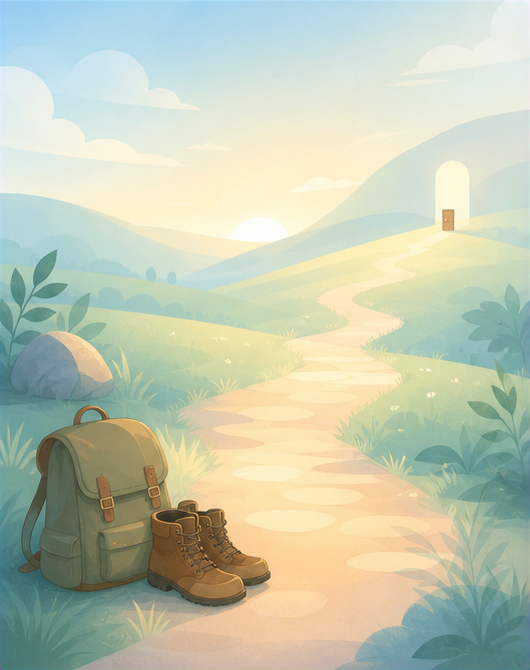
Look toward the next step, and check how much strength is still in your legs.
Notices future options
Willing to scout ahead
Can shrink the next step
Doesn't skip present needs
One square on the map still blank
Everyone else is clearing the table, and you want to see which road is open tomorrow. Your answers this time leaned toward pointing the light ahead, so the story calls you the Pathfinder. It doesn't guarantee foresight, and it doesn't demand you always charge forward — it just shows where your attention to possibility wants to pull you right now.
What direction makes easier
When there's a lot going on, knowing what you want to try next can help decide what's worth doing right now. You can list a few feasible options, then pick one condition that still needs confirming — you don't have to map out the whole road in advance. The future is a reference for planning, not an answer you have to guess exactly.
Always looking at tomorrow can mean missing today
If every break gets spent planning the next thing, ask yourself whether you actually need to eat, sleep, or say something clearly to someone first. However complete the route looks, walking it still takes today's time and energy — those needs can't just wait to be filled in later.
Light up just one short stretch today
Pick one direction you want to move toward, write down what new information the next step would give you, and when you'll stop to check in. Decide whether to keep going once that's done. This lamp isn't planning your life for you — it just gives exploring a real starting point, one you can rechoose from when things change.
This quiz is for entertainment and self-reflection only, not a psychological diagnosis.
EXPLORE / 05
Meet the other possibilities
Every outcome has a story. Explore another perspective and see what resonates.