Result profile
The Satellite
You need your own orbit, but you like staying lightly connected to the world
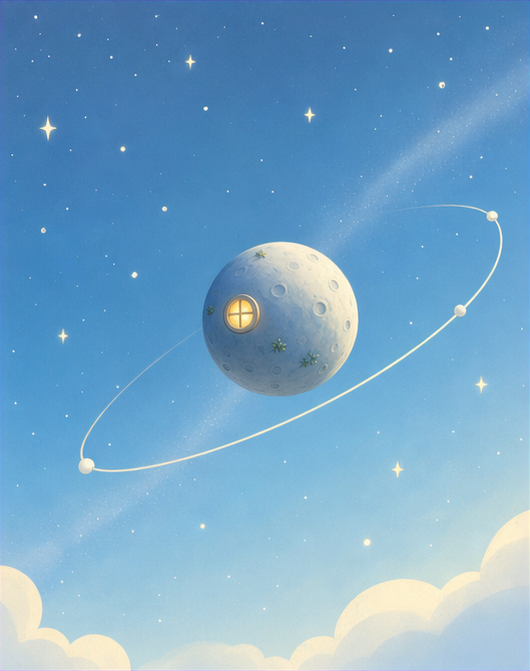
Occasional meetups, everyone stays comfortable.
- recovers alone
- light connection
- low-frequency contact
- keeps its own pace
Result profile
You need your own orbit, but you like staying lightly connected to the world
Occasional meetups, everyone stays comfortable.
You run into a friend on the street, trade a few lines about how things are going, swap the name of a new place to try, and wave goodbye. You don't feel like anything's missing — if anything, you like contact this size. This answer leans toward the satellite: your own time matters a lot, and the occasional light contact is enough to make you feel connected to other people.
You probably don't need frequent meetups, and you don't want every conversation to require handing over something private. That preference doesn't mean you're distant — for you, contact without pressure is the kind that's easier to keep up.
You feel like things between you are perfectly fine, while a friend who hasn't heard from you in a while might start to think you don't want to stay in touch. Sometimes the issue isn't how much you care — it's that neither of you said out loud what frequency of contact you each expect. You don't have to become someone who checks in daily, but you can give the other person a little less to guess about.
"I don't message much day to day, but I saw this and thought of you." Send a photo, suggest a short lunch, or just say plainly, "I want to rest on my own this week — let's plan something next week." Any of these fit your rhythm — pick whichever one you can actually keep up and that the other person will actually feel.
You don't have to go quiet to protect your space. Leaning toward easy contact this time doesn't mean you have no need for deep talk at all — different people, different moments, can call for different distances.
This quiz is for entertainment and self-reflection only, not a psychological diagnosis.
EXPLORE / 04
Every outcome has a story. Explore another perspective and see what resonates.
Currently reading The Satellite
Browsing opens result articles. It does not retake the quiz or recalculate a score.