Hear yourself first, and you'll know which things you actually want.
HITOHIRA ARCHIVE // PORTRAIT SERIESNO. LIGHT_SELF
こころ守り
Hear yourself first, and you'll know which things you actually want.
Notices your own needs
Keeps room to choose
Can name a feeling plainly
Weighs shared conditions too
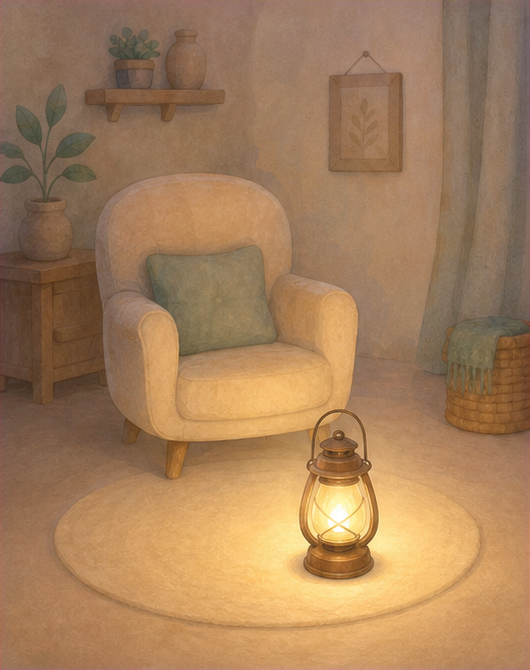
The page the lamp lands on
There are plenty of messages on the table, but you flip the diary open to today first. Your answers this time leaned toward your own feelings and needs, so the story calls you the Keeper of the Heart. It's not a score for selfishness, and it doesn't mean you'll always stay true to yourself — it's just a reminder that when there's a lot to arrange, ask first what you actually want to do.
Separate wanting from should
You can write out the part of something you're genuinely willing to do, apart from the part that's just discomfort at saying no. Sometimes, once that's clear, you'll still choose to put in the shared effort — but at least that choice has your own voice in it, instead of running purely on reflex agreement.
The light needs to reach shared plans too
If something involves other people, once you know what you need, you still have to say out loud what you can and can't do. They can't necessarily guess it from your silence, and they have their own constraints too. Keeping something for yourself doesn't have to mean disappearing — it can just mean naming a clear boundary.
Next time things get busy
Ask first: "How far am I actually willing to go with this, and what part still needs talking through?" Deal with just the one small thing in front of you, and put the answer into a sentence someone can respond to. This lamp doesn't ask you to put yourself first in every choice — it just makes sure your needs are on the table too, where they can be seen and considered along with everything else.
This quiz is for entertainment and self-reflection only, not a psychological diagnosis.
EXPLORE / 05
Meet the other possibilities
Every outcome has a story. Explore another perspective and see what resonates.