That familiar moment
They say they'll be half an hour late, and you've already pulled up the map, recalculating restaurant, movie, and the trip home. Nobody actually asked you to replan the whole thing, but you don't really settle until a new version of the plan exists. Going by your answers, when stress hits, you tend to sort out the details first, pin down the timing, and turn something fuzzy into a list you can work through item by item.
What you're really trying to save
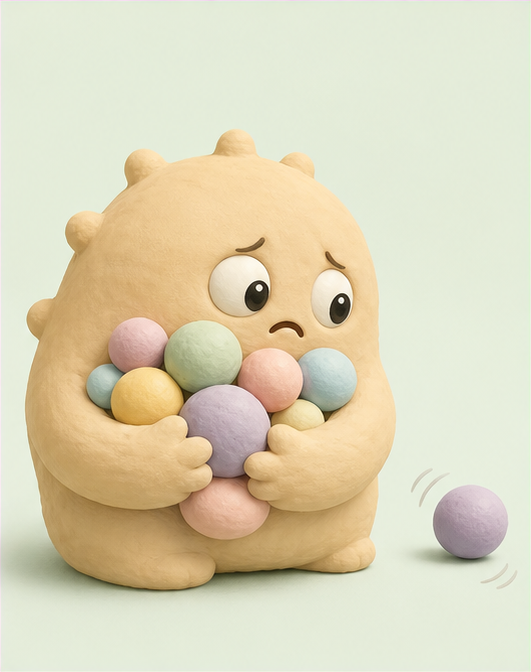
The Planner Beast cares about "what happens next." A plan gives you somewhere to start, and it helps you sort what matters first. The catch is, a plan has your own actions in it, but also other people's replies and things that change last minute. If every box needs to be locked down before you can relax, things that haven't even happened yet become today's work early. You might spend a whole evening building backup plans and never actually get to rest.
The tail it tends to leave behind
Sometimes what wears you out isn't the amount of stuff — it's the ongoing feeling that the arrangement still isn't complete enough. Change one time slot, and you want to recheck the whole table. Hand a piece off to someone else, and you still can't help asking for the details. That can quietly pull work you'd already delegated back into your own hands. The question worth asking is: will checking this again actually change the next step, or is it just going to make me feel calmer for a minute? Both needs are real, but they don't have to be handled with the same move.
A different move for next time
Split today's list into "mine to decide" and "waiting on someone else." From the first, pick the one thing that matters most right now. For the second, write down when you'll check in again — and until then, let it stay undecided. You can also try keeping two acceptable options open for something low-stakes, just to practice that having options is enough, without needing to pick the one perfect version immediately.
Something you can just say
"I've arranged things up to this point based on what I know now — the rest waits until you confirm tomorrow." That keeps things moving while setting a boundary around how much prep you're doing. This result doesn't mean you're naturally controlling — it just points out that in situations like these, certainty is what tends to let you exhale. You can keep the parts of planning that genuinely help, while noticing which unknowns can honestly wait.
This quiz is for entertainment and self-reflection only, not a clinical diagnosis.