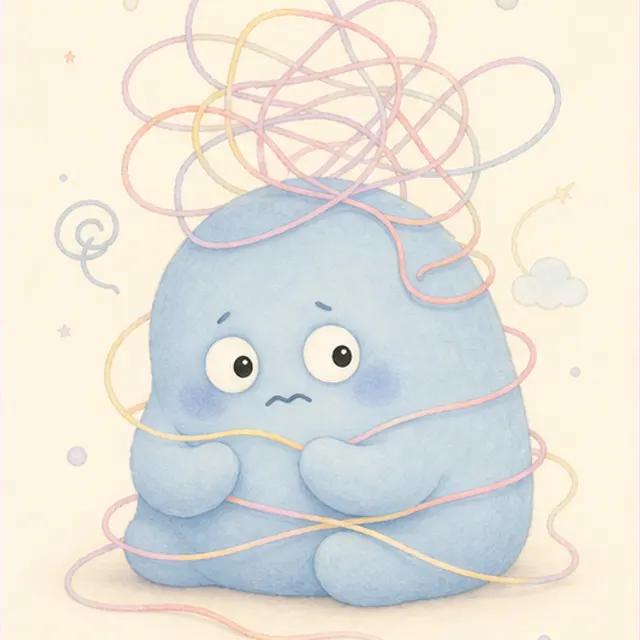
I said it out loud, then let the decision slide anyway.
Can voice its own needs
Tends to give one more step
Willing to negotiate
Needs to follow through on limits
Makes words match actions
Your boundary in the moment
You say, "I'm really full today," and the other person says, "come on, just this once." You pause for two seconds, then say, "Okay, I'll figure something out." This choice leans toward an open door: it's not that you don't know what you need, and you can put the difficulty into words — what's harder is making the final decision match what you just said.
What this gets you
You're willing to talk, willing to adjust, and that keeps things negotiable. There's nothing wrong with that flexibility on its own. What's actually worth noticing is that last step — did you agree after actually thinking it through, or did you just move your own plans out of the way because you couldn't stand the other person's disappointment?
Where you can get stuck
When "I can't" is always followed by "but I'll do it anyway," people can start assuming the first half was just politeness. You've already said you're tired, and you still finish the whole thing — and that tends to leave behind a quiet "why doesn't anyone actually hear me" kind of hurt.
Something to try next time
Decide first what you can genuinely give, then respond: "I can only do the part I already agreed to — I can't take on anything extra." If they keep asking, you can repeat the same line; you don't have to agree to more just to make your reason sound more convincing. Being willing to help with part of it can be a complete boundary on its own.
One line for you
Your needs don't need the other person's approval to count. This result shows the moments where you tend to give in — it doesn't mean that every time you say yes, you're shortchanging yourself.
This quiz is for entertainment and self-reflection only, not a psychological diagnosis.
EXPLORE / 04
Meet the other possibilities
Every outcome has a story. Explore another perspective and see what resonates.