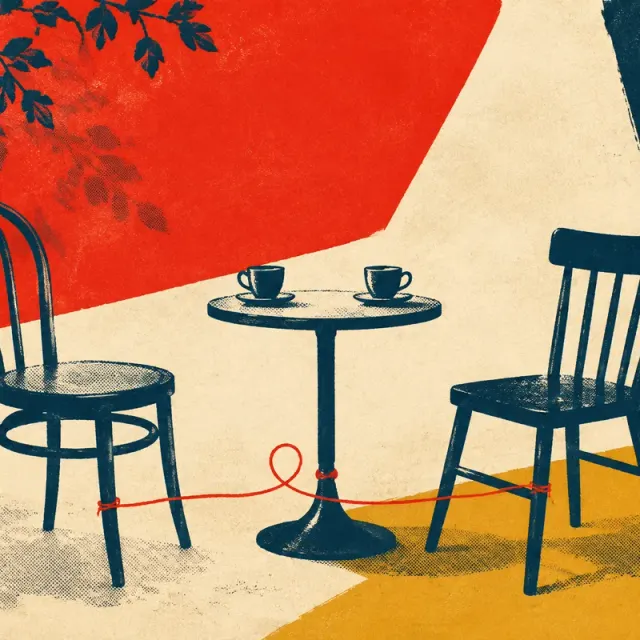
The answer's already been said, but the question in your head wants asking again
HITOHIRA ARCHIVE // PORTRAIT SERIESNO. FLAG_DOUBT
くり返し確認型
The answer's already been said, but the question in your head wants asking again.
Asks again
Wants response
Names the doubt
Watches actions
You just asked, and you already want to ask again
They've already said they still care, and you might feel relieved for a moment — then want to ask the same thing again a little later. This time your answers land closest to The Double-Checker: when something's off, you tend to look for reassurance by asking again. It doesn't treat one reasonable check-in or one conversation about where you both stand as a problem.
What are you actually trying to make stop?
What you might want most is for the question in your head to stop, but the future doesn't become certain just because of one reassurance. If each answer only settles you for a little while, asking again can pull your attention more and more toward whether you've gotten enough reassurance — and less toward the other real, ordinary moments between you.
Tell a new event apart from an old doubt
Before you ask again, check whether there's actually something new you need to know. If there is, talk about that specific thing. If there isn't, you can admit, "I'm feeling uneasy again," without immediately treating that as proof the relationship has actually changed. This isn't asking you to ignore the feeling — it's letting the feeling not have to become new evidence every single time.
Connect the reassurance to something you can actually do
You could say: "I know you already answered, and I'm still a little uneasy. Can we take it slow for a bit and go for a walk together later?" You can also name the kind of time together you want, so the need has somewhere concrete to go. They have their own time too, and you can pick something small you'd already wanted to do, and bring your attention back to your own life for a bit.
Look at ongoing actions too, not just the answers
This result doesn't predict an attachment style or how the relationship will turn out — it only sums up which reactions you picked more often this time. Watching whether agreements get kept, and whether needs are something you can actually talk about, says more than asking the same question over and over. You're allowed to want a response, and you can also practice letting an answer you've already heard rest for a while.
This quiz is original entertainment and self-exploration content. It only summarizes this set of choices, and does not represent a fixed personality, ability, psychological diagnosis, or relationship match.
EXPLORE / 05
Meet the other possibilities
Every outcome has a story. Explore another perspective and see what resonates.