The pinwheel didn't spin, but everyone laughed first
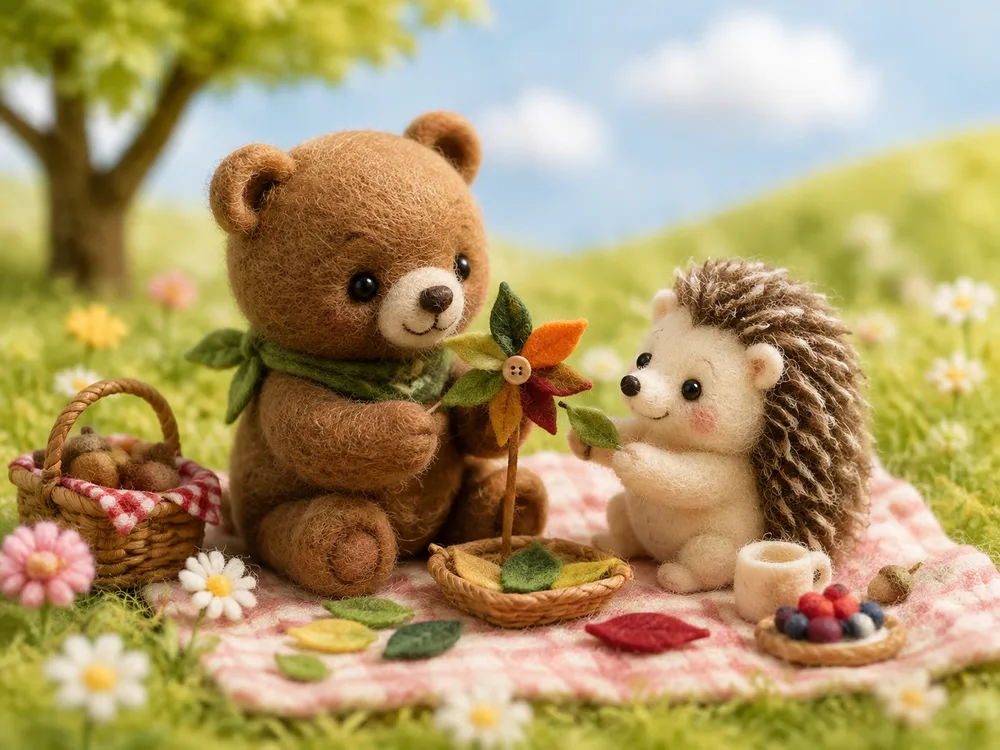
The bear holds the leaf stem steady, the hedgehog tries a different angle, and the first pinwheel still leans crooked. Luckily, no one's demanding today's project actually work. This time the pictures form a story about company and exploring: trying something you haven't done before gives hanging out a natural opening. But the picture doesn't mean you're always the one with the most ideas — you might just want to join in for a bit, let someone else propose things, or find you'd actually rather sit and talk today.
A new activity opens a door for conversation
For friends you don't see often, doing a small thing together can be easier than sitting down and catching up on everything at once. Figuring out how to split the snacks, trying a simple game, hunting for different leaf shapes around the park — all of these give you something natural to talk about. The leaf-pinwheel crew isn't trying to make the get-together impressive; it's borrowing one shared point of attention, so that someone who isn't good at starting conversations still has an easy way in.
An idea needs to be open to change by someone else
After someone suggests a fun idea, the real collaborating only just starts. Someone else might not like the original materials, or might just want to watch for a while. Leaving room to change the idea, or to just watch, matters more than pulling everyone into the same excitement. The point of exploring together is that everyone gets a choice, not that whoever proposed it first gets to decide what counts as fun. Being willing to scale the idea down often makes it easier for it to actually happen.
Don't let excitement turn into pressure
When one activity is about to end, it's tempting to immediately add another, worried that any gap means the day wasn't fun enough. But someone might already be tired, just too polite to break the mood. Before switching activities, actually ask, and let "I want to go home" be a normal answer. Freshness doesn't need to be kept up by constantly adding more; safety, cost, and everyone's energy shouldn't get waved off with "we don't get out much, though."
Try a ten-minute experiment
Pick one small shared task that needs no extra equipment and can stop anytime, and say upfront it's just for fun, no winners. For example, each person finds a fallen leaf, arranges them into an imaginary animal, and someone else gets to name it. Anyone who doesn't want to join in can just watch or take photos instead — every role can be declined. When time's up, pack away the materials first, then decide together whether to keep going, instead of letting the activity keep growing on its own.
What sticks is which part was fun
Whether the pinwheel ended up spinning isn't necessarily the part most worth doing again. Maybe it was someone throwing out a strange idea that everyone went along with; maybe it was laughing together through the mistakes. When the activity's over, have everyone name one thing they'd want to try again, and one thing they'd skip next time. If opinions differ, split off and do your own thing for a bit — no one has to force the same pace just for a group photo. What this card offers is an invitation you can shrink anytime, giving freshness a place to happen while letting anyone who doesn't want to continue stop comfortably.
This is an original story and an everyday question, offered based on the pictures you chose — not a psychological assessment, a fixed personality judgment, or a prediction. A public result page describes one story; it doesn't mean the person viewing it has actually taken the quiz.