Result profile
The Everyday Teapot Shop
Giving one ordinary good thing time to quietly be seen.
Giving one ordinary good thing time to quietly be seen.
- Looks closely, quietly
- Familiar and useful
- Speaks up when needed
Result profile
Giving one ordinary good thing time to quietly be seen.
Giving one ordinary good thing time to quietly be seen.
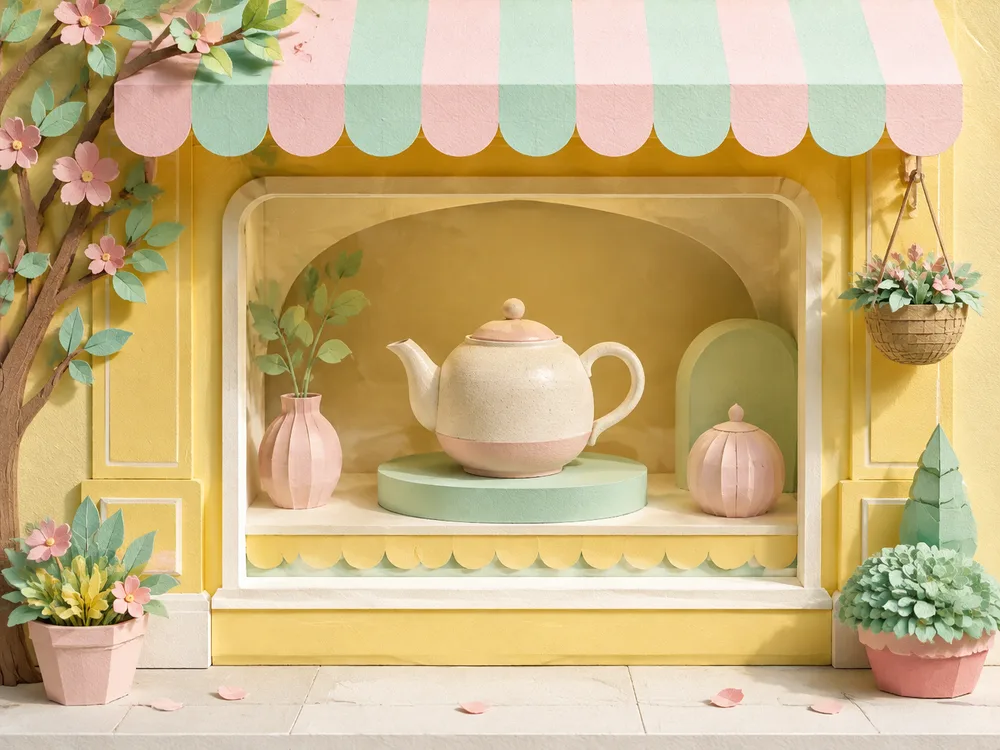
A teapot sits at the center of the window, no bold sign beside it; customers can look at the spout, the handle, the light on its surface on their own. This story keeps its quiet distance, and puts durable stock up front. It doesn't mean you dislike conversation — it's more of a question: if you didn't have to explain why right away, which thing that's been with you a while would you let yourself look at a little longer? Sometimes it's only by leaving space empty that the details you already had get noticed.
When there are a lot of options, attention usually goes first to whatever's loudest. Leaving more empty space lets you slowly tell weight, proportion, and comfort apart. In daily life, that might mean reading one book at a time, using the same familiar mug, or letting one corner of a room stop collecting more things. It's not that less is automatically better — it's wanting to save your limited attention for the part you'll actually use.
A quiet shop still needs clear information: where to find the size, who to ask if you have a question, and that it's fine to look and leave without buying. Giving someone space isn't about making them guess the rules — it's doing the necessary explaining well, then stepping back a little. The same goes for people: you don't have to make small talk often, but you can answer clearly when it's needed. When distance can be understood for what it is, you don't have to fake extra warmth to make up for it.
When you're worried about being sold to or interrupted, you might end up shutting out useful conversation along with it. If the shop assistant tells you the teapot shouldn't go on a certain kind of heat, that warning is worth hearing out; if a friend wants to share a different experience, that's not necessarily a judgment on your choice. You can tell the difference between pressure and information. Quiet doesn't have to become a rule that you decide everything alone — asking one question won't cost you your say in what you love.
Pick one thing you touch every day, and set up an easy spot to grab it and put it back. Try it for a few days, and notice whether the spot is awkward, there's too much of it, or you don't actually need it anymore. Observe first, and don't rush to buy a nicer replacement. If you share the space with someone else, talk it over before you change anything. This small exercise isn't a tidying contest — it's about cutting out that one moment in the day when you have to hunt for something you need.
Pick one thing you use often, write down one line about why it works for you, and keep it somewhere findable; share it with whoever's curious, and if no one is, it doesn't need to become a review. If you want someone to join in without explaining everything out loud, you can just say, “look around, and call me if you have a question.” That's a lot easier than expecting someone to guess their way through silence. This shop invites you to keep a quiet space for appreciating things, while leaving one clear way in — so what you love doesn't have to be loud, and doesn't have to stay locked inside either.
This is an original story and everyday question based on your picture choices, not a psychological assessment, a fixed personality judgment, or a prediction. A public result page introduces one story — it doesn't mean the person reading it has taken the quiz.
EXPLORE / 04
Every outcome has a story. Explore another perspective and see what resonates.
Currently reading The Everyday Teapot Shop
Browsing opens result articles. It does not retake the quiz or recalculate a score.