The scarf drifts forward just a little
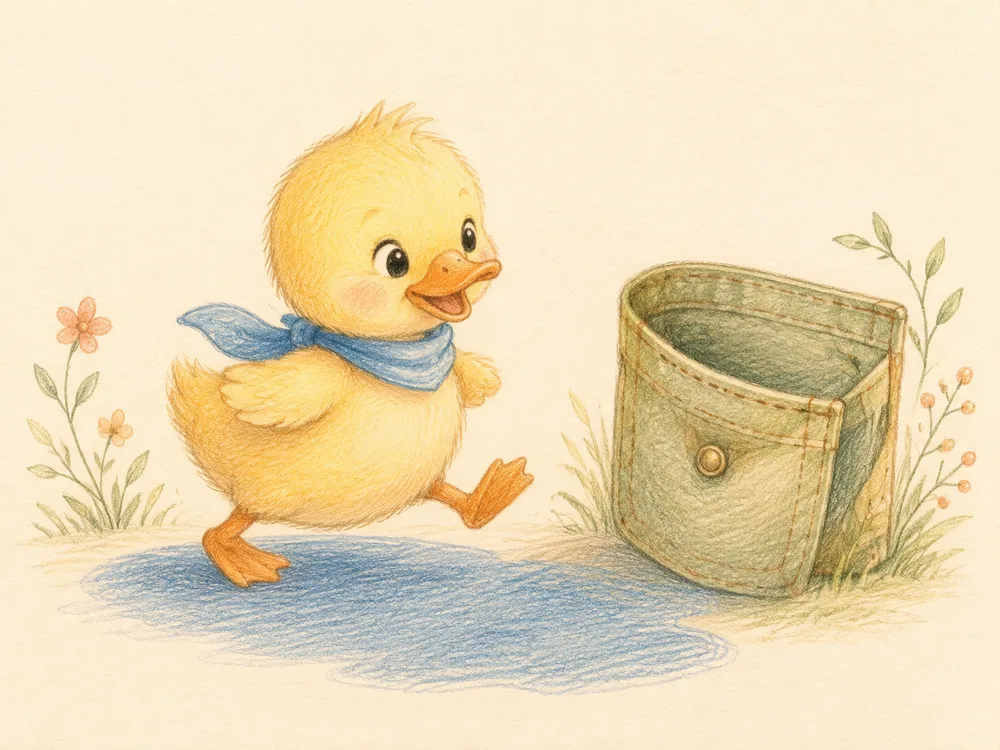
The duckling stands by the pocket, one foot already stepping out, the cloth pouch still there behind it. This story is only about a fitting first step. Is there something you've been meaning to start today that could shrink down to one visible action? Picking the duckling doesn't mean you're naturally driven; it's just leaving a path for the not-yet-started you, one that doesn't have to look impressive.
Starting doesn't mean running far right away
Replying to a short email, laying out what you'll need, or just looking up the first step — any of these count as starting. The duckling doesn't have to learn every way of walking on day one, and you don't have to call it nothing just because you only moved a little. A small, visible action is easier to build on than a perfect opening you only have in your head.
Check the ground before you step forward
Being light on your feet doesn't mean ignoring everything. If something involves an important commitment, spending, or safety, still check the conditions first. For a small thing you can just try, set yourself a limit; for something that needs care, even just researching it counts as moving forward. There are many speeds to set off at — you don't have to rush your own pace just to match the duckling in the story.
Today's small stretch of road
Pick one thing you're willing to touch but haven't started, and write down a first action you could do in two minutes. Getting the materials out, opening a blank file, or sending an inquiry all count. Decide whether to keep going after you've done it, instead of demanding you carry it all the way to the end before it's worth starting at all.
Even the wrong turns are useful
If the first step doesn't go smoothly, look at which part was the problem. Not being able to find the tool, unclear instructions, or bad timing can all be adjusted. Don't immediately translate one small snag into "I'm just not cut out for this." The duckling pausing to look at the water might just mean it's spotted an easier path.
After one step, look at the next
After you start, ask yourself what you now know that you didn't before. If it turns out you need a different approach, keep that information rather than forcing yourself down the original path just to prove you're brave. The next step can be even smaller, or you could ask someone for help first. The duckling doesn't guarantee that stepping out means success; it just reminds you that one fitting attempt can make something that only existed in your head a lot more concrete.
This is an original story and everyday prompt built from your picture choice, for entertainment and self-exploration only — not a psychological diagnosis, a fixed personality judgment, or a prediction of the future.