Result profile
A Solo Walk Along the Coast
The path can be short. The pace is yours to keep.
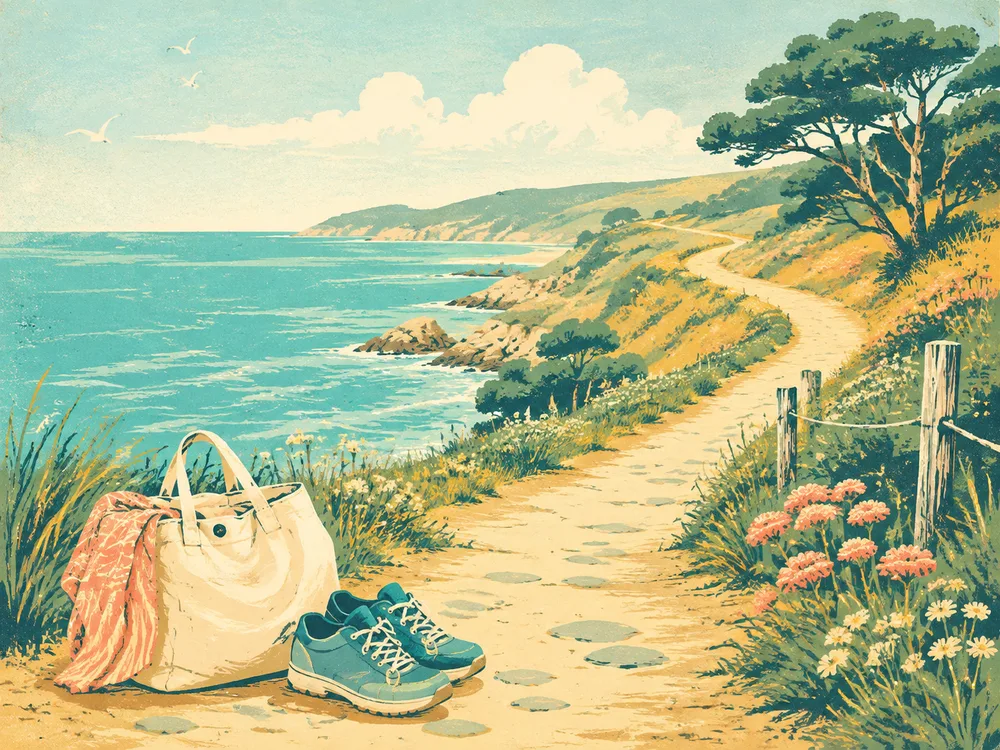
The path can be short. The pace is yours to keep.
- Your own pace
- Curiosity in small doses
- Free to turn back
Result profile
The path can be short. The pace is yours to keep.
The path can be short. The pace is yours to keep.
The boardwalk curves toward the lighthouse, and the color of the sea shifts a little with the angle. This story puts moving and personal space together, and asks: if you didn't have to match anyone's pace, where would you stop? This isn't about judging whether you're independent. It just borrows a stretch of coastline to try giving your curiosity, and the timing of your next step, to yourself first.
A solo walk doesn't need a checklist. Stop when you see a shop you like, skip a stretch that doesn't interest you, and don't feel you have to finish it all just because you came. The freedom here isn't about going the farthest — it's being able to feel when you want to move on and when you want to turn back. The route is only a frame; what actually happens along it is the trip itself.
Keeping your own pace doesn't mean not talking to anyone all day. Asking a shopkeeper a question, giving a passerby a polite nod, or saving something interesting to share later — all of that can happen naturally. You don't have to pick a permanent stance between solitude and connection. Wanting to walk your own path today can still leave room for other people's small kindnesses and the sounds along the way.
Out in the real world, you still have to think about time, weather, transit, and how tired you are — the story being light doesn't erase those conditions. Sorting out the way back and what you actually need makes the exploring feel safer. If you can't get out today, looking differently at a street corner you pass every day is the same kind of noticing, in a smaller form.
Pick a stretch you'd normally walk anyway, somewhere easy to stop, and try to find three things you've never noticed before. It could be the color of a window frame, something small outside a shop's door, or a shadow that only shows up at a certain hour. Don't block people's way for a photo, and you don't need to take the long way around. When you're done, pick just the one detail you most want to remember and write it as a single sentence — let the noticing end gently.
When something catches your eye, you don't have to pull out your phone right away to prove it to everyone. You can take it in fully first, then decide whether to keep a photo or tell a friend. This walk wants to hand the choice back to you: some views are worth sharing, and some moments are enough just kept to yourself. Neither way is better — it depends only on which one fits how you feel in the moment.
When the walk is over, keep only the one detail you want to remember — don't rush to count what you missed. Think about what felt best: the new view, or being able to decide on your own when to stop. Next time, start planning from that. This kind of walk can happen in a neighborhood you already know; it doesn't need distance to count. What the story wants to leave you with is a pace that can choose a direction and still turn back — not a role that always walks alone.
This is an original story and set of everyday questions built from your picture choices, for entertainment and self-exploration only. It is not a psychological diagnosis, a fixed personality judgment, or a prediction.
EXPLORE / 04
Every outcome has a story. Explore another perspective and see what resonates.
Currently reading A Solo Walk Along the Coast
Browsing opens result articles. It does not retake the quiz or recalculate a score.