Sunshine arrives, and cloudy days can still happen
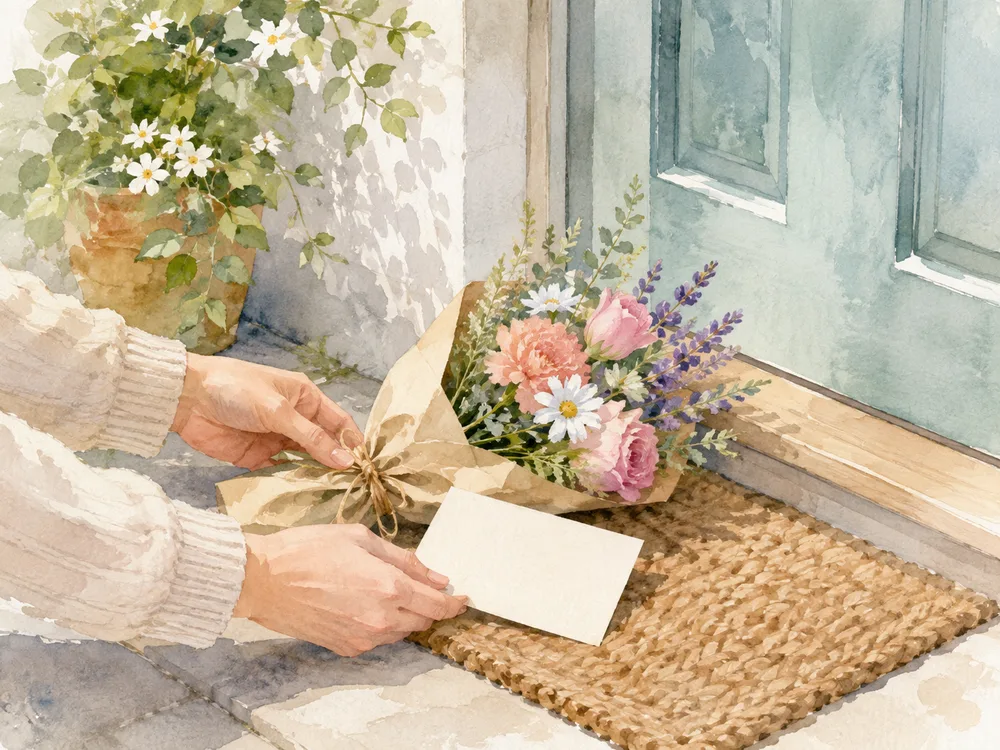
The yellow and orange bouquet sits by the door, like a slightly louder "hey, I was thinking of you." This picture combination sends a bright feeling to a friend, and what it's practicing is saying appreciation like you mean it. When they receive it, they might smile — or they might just be tired, without the big reaction you pictured. That doesn't erase the gesture; the story only wants you to think about which thing you noticed about them today that you actually want them to know, rather than which expression you're hoping to get back.
Appreciation can land on specifics
Instead of a broad "you're amazing," try describing exactly what you saw: "You just laid out everyone's questions so clearly." A line like that doesn't need exaggeration, and it doesn't need to compare them to anyone else, to still carry real weight. It tells them exactly which moment got noticed, instead of suddenly putting them on a pedestal they now have to keep living up to.
Share the good mood, but leave room for other expressions
Some people respond to encouragement loudly, some get a little shy, and some don't know how to respond in the moment. A bright feeling can arrive first without demanding an equally loud reaction. If they don't have anything to celebrate right now, it's fine to simply share a line of appreciation, instead of forcing a celebration they have to match. The pace of giving flowers can still listen to the person receiving them.
Don't let cheering up replace listening
When someone is telling you something is hard, a bouquet or a "you've got this" isn't necessarily what they want to hear. You can ask first: "Do you want to talk about it, or would you rather change the subject?" If they just need to be heard, there's no need to rush to brighten the mood. The best part of this flower story is being willing to share warmth, not requiring everyone to become happy on command.
Today's little sunshine card
Pick one detail you genuinely noticed and genuinely appreciate, and write it as one line without comparison. Cut words like always, the best, everyone thinks — the ones that speak for other people — and keep your own observation. Say it to them if it fits, or hold onto it for now if it doesn't. You don't need a gift, or a special occasion, to earn the right to say what you noticed.
Their expression doesn't have to match the flower's color
Write one line of appreciation about something specific they did, then cut any overblown promises. Instead of "everything will be fine with you around," maybe "thank you for staying to hear me out yesterday" tells them more clearly what they actually did. If the response back is muted, let them have their own state first instead of rushing in with more gifts or more words. This bouquet of sunshine isn't responsible for clearing every cloudy day; it just offers one clear, not-too-much way to say something you genuinely care about.
This is an original story and set of everyday questions built from your picture choices, for entertainment and self-reflection only — not a psychological diagnosis, a fixed personality judgment, or a prediction.