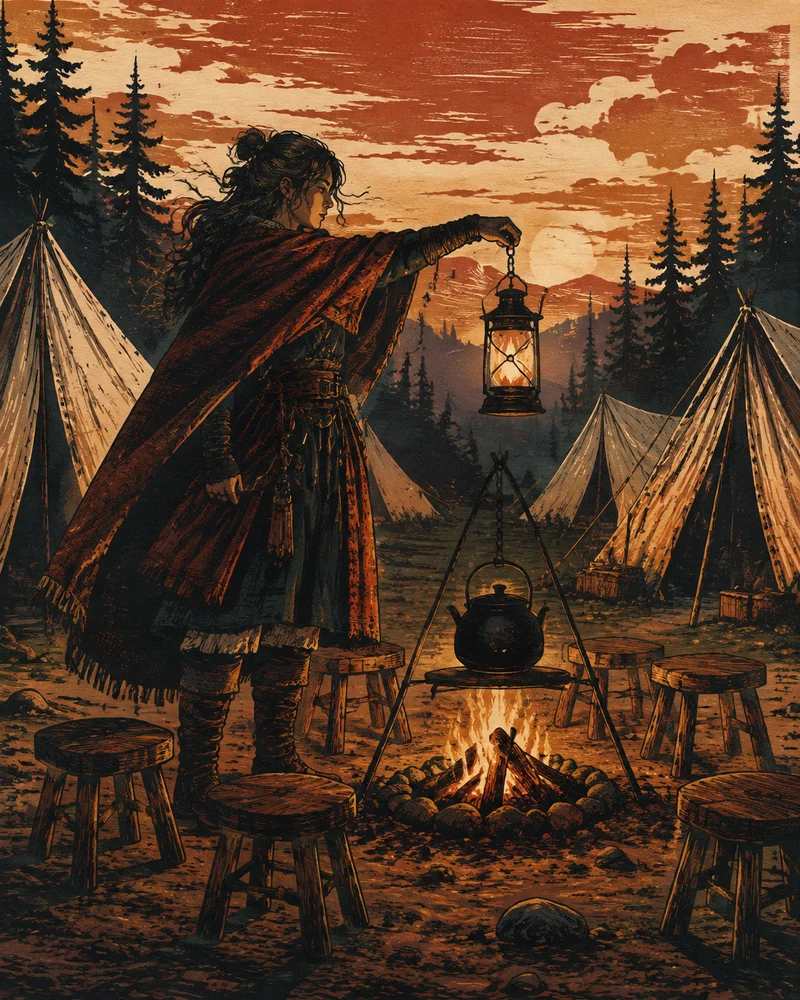
The fire didn't go out — someone remembered to feed it
The Fire-Keeper Captain stayed at the meeting point, checking the water, the signals, and the supplies for the way back, so the scouting group could pick up right where they left off. This time your answers leaned toward supporting the rear, watching concrete conditions, and working things through in person. This role doesn't mean you're naturally dependable or obligated to carry the responsibility — it just describes what you tended to notice first in this story: the part that keeps the whole task running.
The unremarkable conditions still shape how far things get
A tool no one can find, an unset meet-up time — either one can stop even fast progress in its tracks. Pointing these things out gives the team something to coordinate around. Support doesn't have to mean doing it all yourself; you can just flag the gap and ask the right person to help close it, letting the need stay visible instead of quietly carrying it alone.
Working it through once beats just saying "got it"
This time you tended to pick working it through together on the spot, so someone still learning could ask right away. That helps surface steps that used to live only in an expert's head, never actually spelled out. Also leave room for the other person to try it themselves; if you always end up doing it for them, it might look smooth, but it won't leave behind the skill to continue without you.
Always covering the gap can hide your own load
If, in this story, everyone can hand their gaps to you whenever they want, the fire-keeper might never get a break. If that sounds familiar, say up front how far you can go today. Support doesn't need to prove itself through being infinitely available — clear division of labor actually makes it easier to see where help is genuinely still needed.
Holding steady doesn't mean keeping everything the same
Sometimes the most efficient kind of support is fixing a step that keeps causing the same problem, instead of patching the same hole every time. Ask which step trips people up most often, or whether someone wants to try a different approach. Test the new method on a small scale first, then look at the actual results — wanting stability and being open to change can coexist.
Name one gap out loud today
When a shared small task comes up, try: "I can cover these two parts — the other one needs someone. Who's free?" Then walk through it once with whoever takes it, and hand the decision back to them. Afterward, only look back at which handoff actually helped and which one was just repeated work. That turns support into a visible division of labor, instead of quietly doing extra in the background.
Before banking the fire, pour yourself a cup of water too
Once the festival starts, the Fire-Keeper Captain can sit down — no need to walk one more final lap for everyone. What this card keeps is attention to conditions and a habit of checking in together, not a promise that the team always needs you. You can support the rear on some tasks, and choose to scout ahead next time. The role can change with the situation, and so can how much of it you carry.
This is a story role built from 18 original scenario choices. It is not a diagnostic result from a psychological test, not a competence score, and not career advice — enjoy it for fun, and don't read too much of your real life into it.