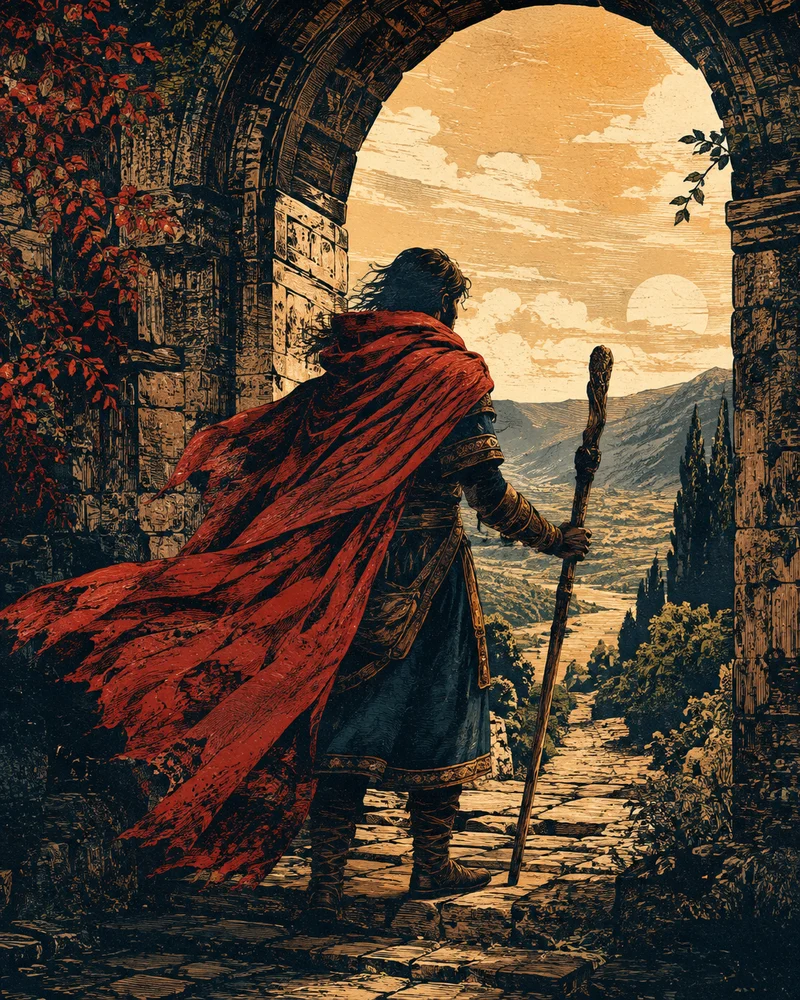
The first flame lights the first stretch of road
The gate had just opened when the Crimson Vanguard went with the guide to check the ferry landing. Coming back, there was no easy "it's fine" — just a finger on the map, pointing at the exact spot, calling the others over to confirm it. This time your answers leaned toward scouting ahead, checking concrete clues, and working things through in person, so the story gave you this role. It isn't proof of courage or leadership — it's just the order you tended to reach for in this particular story.
Give the unknown a shape first
Rather than guess from a distance, this role is willing to walk to where things can actually be checked, and bring back a time, a location, a real condition. When the party is stuck on vague information, that kind of scouting can make the problem concrete. But what you saw was still only a snapshot of that moment — say plainly how far your observation reaches, or people may assume the whole road has already been checked.
Working it through together lets questions surface on the spot
With a teammate who's still finding their feet, you tended to walk it through with them this time. The moment they get stuck on a move, you can ask and adjust right there, instead of waiting for everyone to read the instructions alone before setting out. This also needs the other person to be open to company — some people want to try it alone first, and that isn't the same as refusing to work with you.
Moving fast can also leave people behind
Once you've already seen the next step, it's tempting to just lead everyone there. But the other person might not yet understand why the route is changing, or still needs to go back for gear. If this scene reminds you of daily life, try stopping at one clear point, confirm everyone's on the same page, and only then move on together.
Keep the action separate from the guarantee
You can bring back news without promising you can solve every hard part yourself. When something is outside what you know well, asking the right person or just reporting the unknown is still moving the task forward. There's fire in the name, but that doesn't mean charging in first every time — knowing when to hand information to someone else is also part of making it useful to the team.
One line to take home today
Next time you're handling something small with someone else, try: "I'll check this part first and tell you what I find — do you want to try it with me, or wait for me to sort it out?" Say the scope of your scouting and how you want to work together, both out loud. Afterward, note one thing you guessed wrong and then actually saw for yourself — so the experience leaves more than just a feeling of having done something.
A vanguard can hand off the lead, too
Once the lighthouse is lit again, the Crimson Vanguard doesn't need to stand at the front forever. Look back at your answers — which parts actually feel like you, and which ones you only wanted to try because of the story? Keep whatever's useful. What this card wants to hold onto is the order of checking, explaining, and walking alongside — not a requirement that you open every road for every team you're ever on.
This is a story role built from 18 original scenario choices. It is not a diagnostic result from a psychological test, not a competence score, and not career advice — enjoy it for fun, and don't read too much of your real life into it.