Result profile
Two Cups, Slow Talk
Someone sits with you — you don't have to keep the conversation going alone.
Someone sits with you — you don't have to keep the conversation going alone.
- easy company
- silence is fine too
- not carrying it alone
Result profile
Someone sits with you — you don't have to keep the conversation going alone.
Someone sits with you — you don't have to keep the conversation going alone.
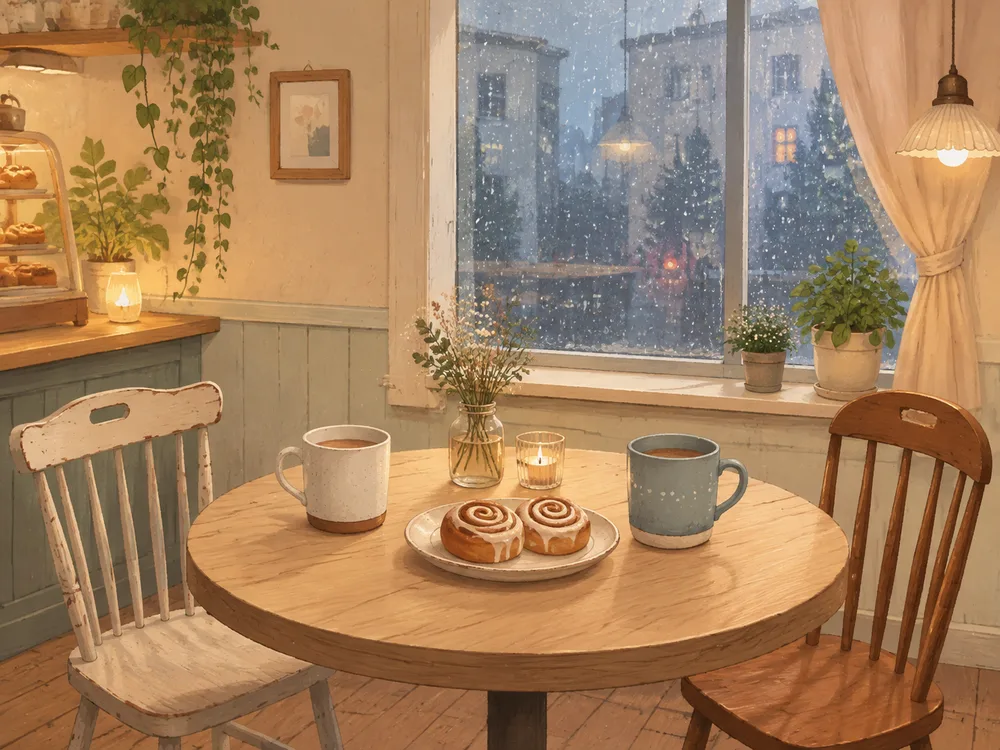
The cups on the round table don't match, but both chairs still hold a comfortable position. Your picture choices put company and rest side by side: this isn't about turning the afternoon into a deep interview, just wanting someone to sit through the rain with. If the conversation pauses for a few seconds, are you willing to not rush to fill it? This table is inviting you to imagine a lighter kind of togetherness — it doesn't mean you're usually good at listening, and it doesn't put you in charge of keeping the other person entertained.
When friends meet up, it's easy to feel like you should have some worthwhile news ready to share. But a plain hot lunch, or a dog you saw yawning on your commute, is plenty to open with. Two Cups, Slow Talk cares about both people being able to show up as they actually are, not cutting the last while down to highlights. Having no progress to report doesn't mean there's no today worth meeting for.
Easy company sometimes drifts naturally toward something harder to say. When that happens, you don't have to switch straight into analyzing or advising — you can just ask: "Do you want to keep talking, or should we eat something first?" Leave the choice with whoever is speaking, and give yourself room to say so if you can't hold what comes next. Being there for someone doesn't mean having an answer to everything; sometimes it just means letting them finish the sentence.
If the same person always fills every lull, relaxing can quietly turn into another kind of shift work. Notice if you're already tired but still afraid to stop in case you disappoint the other person. You can say you want to keep it light today, or agree to stay until a certain time. A comfortable table should hold both people's pace, not one person working nonstop to make sure the other never feels a gap.
Pick someone you already wanted to see, and suggest something concrete but small — sitting somewhere convenient for both of you for half an hour, with no built-in expectation of shopping or dinner after. Leave room for them to say no or reschedule too. If it doesn't work out this time, sending one small thing that reminded you of them is enough — you don't have to follow up asking how they're doing. The invitation has already gone out; when to reply is theirs to decide.
Turn "let's meet up sometime" into a small, defined shape — finish a cup and then head off, share what's new if you feel like it, and it's fine to sit in silence too. Afterward, notice which part actually felt good: the conversation itself, or not having to prove the time together was interesting. Once you know the difference, you can plan a little lighter next time. What this round table offers is an invitation to company, not a role where one person has to talk more or listen more; as long as both people actually want to be there, an ordinary afternoon has somewhere to land.
This is an original story and everyday prompt generated from your picture choices, not a psychological assessment, a fixed personality judgment, or a prediction. A public results page shows one possible story and doesn't mean that reader actually took the quiz.
EXPLORE / 04
Every outcome has a story. Explore another perspective and see what resonates.
Currently reading Two Cups, Slow Talk
Browsing opens result articles. It does not retake the quiz or recalculate a score.