Save one corner of the table to start. The finished piece can wait.
HITOHIRA ARCHIVE // VISUAL SERIESNO. QMAKE
Save one corner of the table to start. The finished piece can wait.
Materials, easy to start
The process can stay private
Room for unfinished work
The Paper's Ready, You Don't Need the Finished Piece Yet
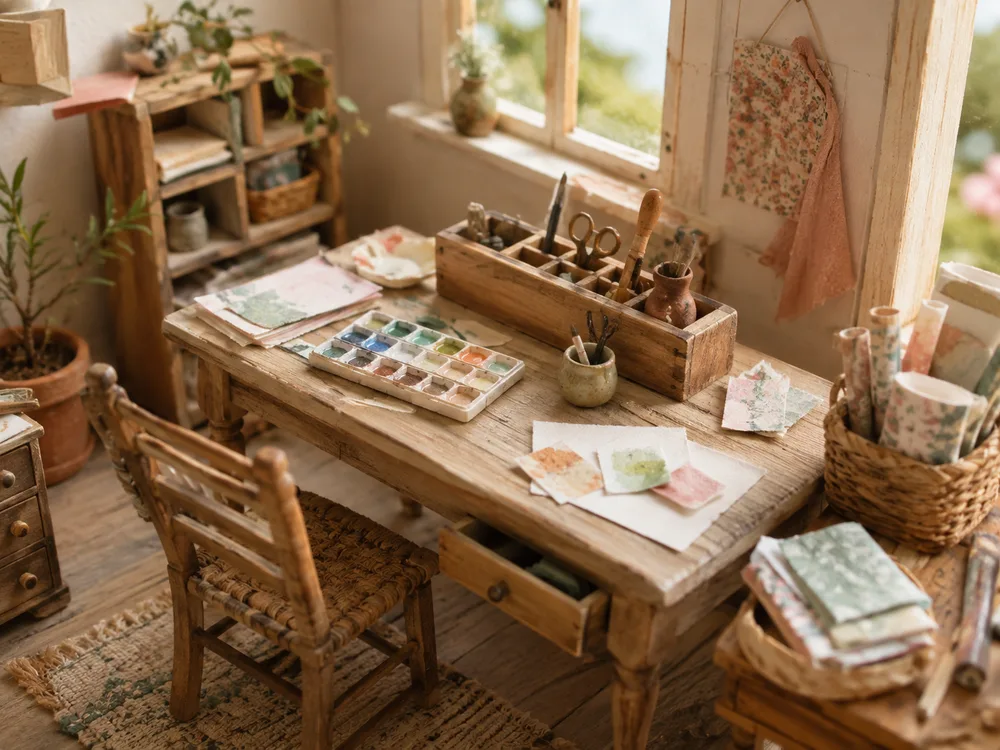
Window light falls on the paper and paint, and the table just needs room for one person to stretch out an arm. This arrangement leans toward your own space and toward making things, and the story wants to ask: if you didn't have to produce something worth showing, what mark would you try today? Liking this picture doesn't prove you have talent, and you don't need every tool shown in it. One sheet of paper and one small enough idea is enough to find out whether you actually like making things, or just like the idea of a pretty studio.
Make Starting One Step Shorter
Sometimes you haven't stopped liking a hobby — it's just that every time you start, you first have to find the tools, clear the table, check the supplies, and over time it keeps getting put off. The point of this room isn't to pile up supplies, but to make the one set of things you use most easy to pull out and easy to put away. A small tray, or keeping half a table clear and usable, might help more than buying a full set of professional gear all at once. The space can serve one simple action first, and adjust later once you actually need more.
Being Alone Isn't the Same as Locking Yourself to a Standard
No one else is around, but there can still be a strict judge living in your head: this stroke's no good, that part's too ordinary, what you're making doesn't seem worth much. If you notice you're rejecting the work before you've even started, shrink today's goal to trying out materials, finding one way of doing it, or just figuring out which step isn't working. And don't treat finishing it alone as a rule — you can still ask someone when you need to. Keeping your own space and accepting other people's help can exist at the same time.
Leave a Parking Ticket for the Unfinished Piece
Today, pick a small project of about ten minutes, and before you start, decide how far you'll take it this time. When you stop, write down where the materials are and what you want to try next, then gather everything somewhere easy to come back to. This simple parking ticket means you won't have to guess next time where you left off. Even if you decide not to continue later, you can still keep one thing you learned — an unfinished piece isn't proof of failure, it can just be a practice run you already used.
Leave the Unfinished Piece, and Leave Yourself Free to Go
Before clearing the table, write one line about where to pick up next time — you don't need to turn the whole process into a plan. If this was just play today, you can put it away as is; you don't owe the piece a finish date. If you want to come back in a few days, start from that line; if you don't, you can try something else instead. What this studio offers is a creative spot that's easy to step in and out of — it doesn't ask you to have inspiration every day. The corner of the table can wait for you, and any setup that's actually useful should also leave room for stopping.
This is an original story and everyday reflection built from your picture choices, for entertainment and self-exploration only — not a psychological diagnosis, a fixed personality judgment, or a prediction of the future.
EXPLORE / 04
Meet the other possibilities
Every outcome has a story. Explore another perspective and see what resonates.