Result profile
The Two-Chair Tea Room
Rest together, without staging a whole show for the visit.
Rest together, without staging a whole show for the visit.
- Relaxed, together
- Invitations that wind down
- Ordinary catching-up is enough
Result profile
Rest together, without staging a whole show for the visit.
Rest together, without staging a whole show for the visit.
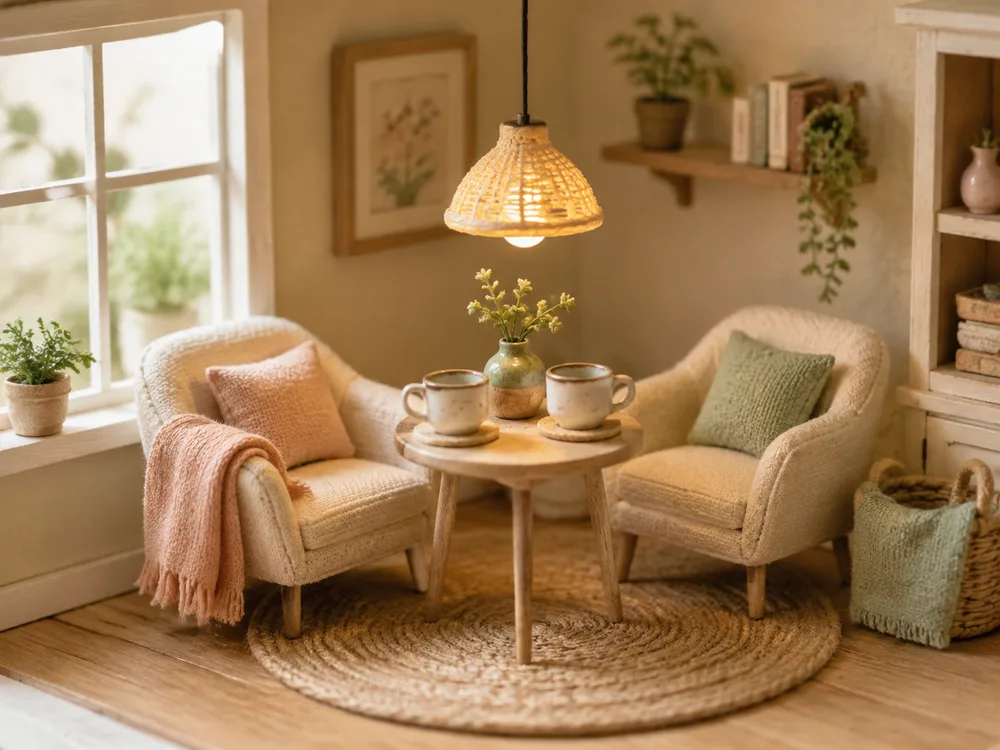
Two chairs face each other, an extra pair of slippers waits by the door, and there's no topic pinned to the table that you absolutely have to discuss today. Your picks put sharing and resting into the same small room. It invites you to consider: if you want someone to be there with you, could you prepare a little less, so the invitation is easier to actually send? This isn't two chairs deciding you're an extrovert — it's a way to start time together that doesn't require performing enthusiasm.
Sometimes, trying to make a get-together worth it, you end up scheduling a lot and preparing a lot of topics, and you're more tired at the end than at the start. The two-chair room wants to leave a simpler option: have a drink together, each flip through your own book, or talk about one ordinary little thing. You don't have to keep hosting, and you don't need an excuse for every silence. Comfortable company can hold two people just going about their day, with no big news for now and no conclusion that has to be reached.
Making someone feel at ease doesn't mean you have to be available at all times. When you invite them, you can mention roughly how long you have, and say so directly if you need to end early; if they'd rather be quiet, change the subject, or can't make it, that's their own space too. If the room is shared with others at home, their plans need to be considered as well. A tea room that actually works isn't kept going by one person constantly accommodating everyone — it comes from everyone knowing which comforts they can build together, and which limits they need to respect together.
Think of someone you'd already be happy to see, and send an invitation with a clear scope and almost no prep required — thirty minutes to sit together, say, or a familiar walk you both know. Spell out the time and the format so it's easy for them to decide, so they don't have to guess whether it's some big event. If meeting up doesn't suit right now, a short call can work too. Once you've sent it, you don't need to chase a reply right away — the empty chair can just wait until the timing suits you both.
Next time, say up front how long you have, then share whatever you already have on hand — no need to turn the place into a showroom, or fill every second with a new topic. Afterward, ask yourself and them what felt the easiest, and keep just that for next time. If someone wants a deeper conversation, that can be its own separate time. What this tea room wants to protect is the room for both of you to sit down — not all the work of hosting landing, again, on someone who wanted to rest in the first place.
This is an original story and everyday reflection built from your picture choices, for entertainment and self-exploration only — not a psychological diagnosis, a fixed personality judgment, or a prediction of the future.
EXPLORE / 04
Every outcome has a story. Explore another perspective and see what resonates.
Currently reading The Two-Chair Tea Room
Browsing opens result articles. It does not retake the quiz or recalculate a score.