Result profile
The Mid-Task New Idea Garden
Try a new idea together, and still leave room for "not right now."
Try a new idea together, and still leave room for "not right now."
- Figures it out together
- Checks before adding on
- Can shrink the scope
Result profile
Try a new idea together, and still leave room for "not right now."
Try a new idea together, and still leave room for "not right now."
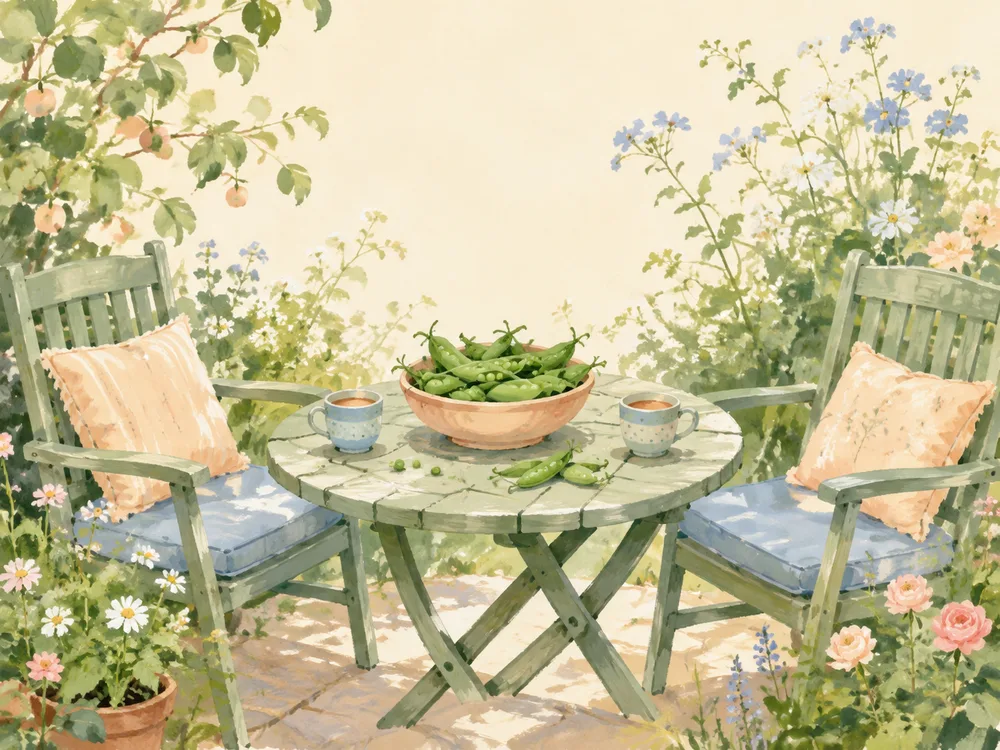
Two cups sit on the table, and someone by the trellis suddenly thinks of another way to tie the twine. This story puts working with your hands, doing it with someone, and staying open to change all together — the afternoon doesn't have to run exactly to plan. But one person getting excited about a new idea doesn't mean the other person already said yes. What this asks is: how do you give a stray idea a real chance, without quietly folding someone else's time into your new plan?
When you're both curious, shrink the idea down to something you can actually see. Try just one knot, sketch just one version — that's enough to know if you want to keep going. The upside of a small try is you're not committing the whole afternoon up front, and you don't need a fully reasoned case before you start. Spontaneity here is a plan you can choose to use, not a rule that every passing thought has to be chased.
What started as just having a drink of water can turn into repotting one more thing, then building one more support, and the rest quietly disappears. If the table starts filling up, stop and count: which things do you both actually still want to do, and which ones are just there because nobody said no yet? Writing a new idea down isn't giving up on it — sometimes it just means the fun doesn't have to be used up today, and it leaves an easy place to pick back up next time.
When you bring up an idea, add "you can just listen too, you don't have to join in." If the other person isn't interested, let that answer stand — you don't need to talk them into your enthusiasm. You can also admit you thought you wanted to do it and then found out, once you tried, that you were tired. The change in this garden includes switching to a new way of doing things, and it also includes deciding not to play along; even with an agreement made ahead of time, wanting to change it still means asking again.
Pick something small you already wanted to try together. Agree to just ten minutes, then each decide separately whether to keep going. Use what's already on hand — don't over-prepare for a first attempt. Before you start, say who's doing which small part, and at the end, ask which moment was the most fun and which part you don't want to add to. You don't need matching answers; even one person wanting to try it a different way next time counts as useful information from this attempt.
Put the tools away and write the untried ideas in a corner, then call today done. If what you actually like is discovering things together, you don't need to finish a project every time; if what you like is working with your own hands, you can also keep a stretch of time where you each do your own thing. This story isn't saying you're full of ideas — it's just inviting you to notice which kind of change makes being together feel better. Give ideas a way forward, and let everyone decide how far along it they go.
This is a story pieced together from the pictures you picked, purely for fun. It's not a psychological test and doesn't diagnose anything — read it, smile, and don't take it too seriously.
EXPLORE / 08
Every outcome has a story. Explore another perspective and see what resonates.
Currently reading The Mid-Task New Idea Garden
Browsing opens result articles. It does not retake the quiz or recalculate a score.