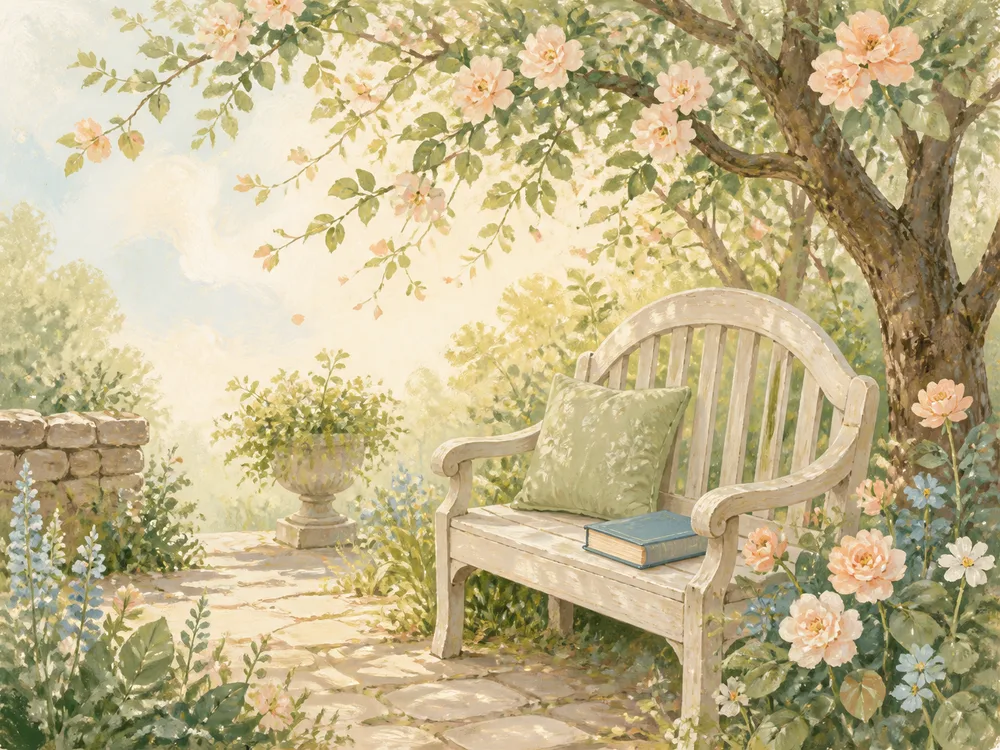
A book still unopened sits on the bench
The shade shifts by your feet, and you sit down without rushing to turn a page. This version puts resting, having your own space, and having a plan beforehand all together — what it's trying to hold onto is a stretch of time you don't have to keep checking for interruptions. It's not reading control-freak tendencies into a bench. It's just asking you to think: which necessary things, handled just a little, would let you actually settle down? And which of them could really wait, instead of needing to be finished before you're allowed to sit?
A fixed frame doesn't need fixed content inside it
Agreeing on a rest period's start and end doesn't mean you have to schedule what happens in between. You can read, or leave the book beside you; background noise or total quiet — whichever actually feels comfortable. The point is knowing this stretch of time doesn't have to answer to anything else at the same time. If shared space makes this hard, negotiating a small window with whoever you live with is easier than waiting for the perfectly private room.
Zoning out doesn't need to become another achievement
If you sit for a few minutes and your mind drifts back to work, that doesn't mean the rest failed. You can just notice it and bring your attention back to your cup or the shade, without resetting a timer or forcing your head empty. The bench in this story doesn't promise that sitting on it restores all your energy — it just lets you stop adding more to your plate for a while. If what you actually want today is to move, a short walk works just as well; you don't have to hold one fixed posture of "resting."
When you're interrupted, restate the boundary
If someone shows up with a question, first decide whether it genuinely needs handling right now, then say when would actually work. Handle what can't wait, and set a clear time for what can — you don't have to flatly refuse everything or take it all on either. This is also a chance to check whether what you said earlier actually landed. Quiet doesn't only come from a closed door — a clear negotiation usually leaves you with more usable space next time than stewing about it afterward does.
Cut one thing off ten minutes today
Pick a stretch of time you could actually pause in. Handle the necessary replies first, then put away one thing that easily pulls your attention. Choose just one — don't replan your whole day over this. Sit, drink some water, look out the window — none of it needs to be judged by whether your mood improved. At the end, just note which condition actually helped, and try that one again next time. If ten minutes isn't realistic, shrink it to whatever you can actually spare.
The shade's moved on — the book can stay closed
You don't have to walk away with reading progress to show for it. Maybe all you find out is that setting a reply time ahead of time meant checking your phone a few fewer times — that's already useful information. Keep the parts that helped, drop the ones that didn't; you don't owe loyalty to this exact result card. What this bench story wants to offer is a way into rest, not a new discipline to keep up. The blank space has a boundary — and it's still allowed to stay genuinely blank until you're ready to go back to whatever's next.
This is assembled from the pictures you picked, for fun and self-observation only. It's not a psychological test and doesn't constitute any diagnosis or prediction.